Kitchens are full of breakables. This guide shows exactly how to pack plates, glasses, cookware and appliances so they survive the move — including the materials you need and the wrapping techniques that actually work.
If there is one room that causes the most moving-day breakages, it is the kitchen. Glasses, plates, mugs, bowls and appliances are heavy, awkward and fragile in equal measure — and they are exactly the kind of items that shift, rattle and crack if they are not packed properly. The good news is that packing fragile kitchen items well is a skill, not luck. Follow the right sequence, use the right materials and take your time, and you will open every box at the other end with everything intact.
This guide walks through the materials you need and then takes each category of kitchen item in turn, with the specific wrapping and packing techniques that protect each one. If you would rather leave it to professionals, a packing service can handle the entire kitchen — and the rest of the home — with commercial-grade materials.
Planning a Move? Request a Quick Quote
Tell us where you are moving from, where you are moving to and your preferred moving date. Our team will review the details and contact you about your move.
Request a Removal QuoteCall 01293 204995
Materials You Will Need
Before you wrap a single glass, gather the right materials. Skimping here is a false economy — a few pounds spent on proper packing supplies is far cheaper than replacing broken crockery. Your kit should include:
- Small and medium boxes — kitchen items are dense and heavy, so smaller boxes keep the weight manageable and stop the base giving way.
- Packing paper — clean, unprinted paper for wrapping and for crumpling into cushioning between items.
- Bubble wrap — for glasses, stemware and anything especially delicate.
- Cell dividers or glass racks — ready-made cardboard dividers for glassware, or you can improvise with cardboard offcuts.
- Packing tape — good quality tape, and plenty of it, to seal boxes securely.
- A marker pen — for labelling, including a clear “fragile” note on the top and sides.
How to Pack Plates and Bowls
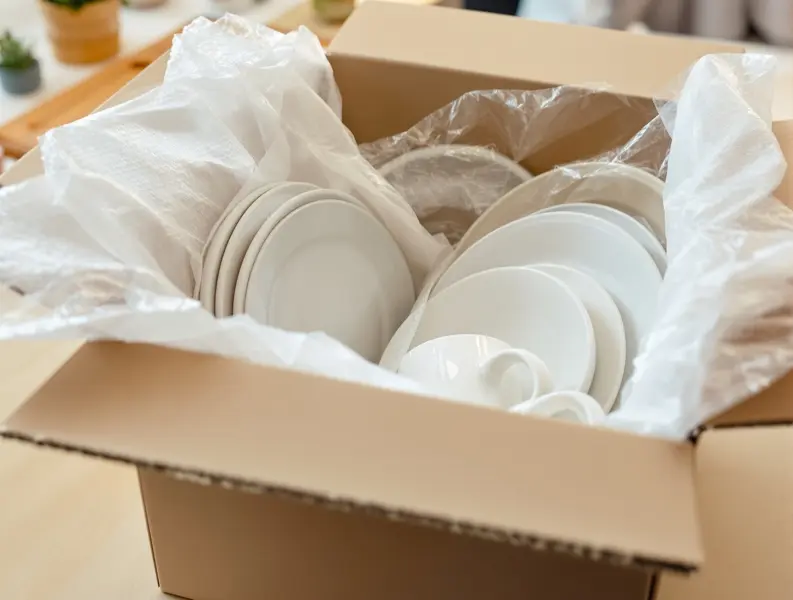
Plates should always be packed vertically, on their edge, never stacked flat. Stacked flat, the weight of each plate presses down on the ones below, and a single bump in transit can crack the whole stack. Packed on edge, each plate absorbs impact along its strongest axis. Start by placing a cushion of crumpled paper in the bottom of the box, then wrap each plate individually in a sheet of packing paper, folding the corners in like an envelope.
Stand the wrapped plates on edge in the box, slightly overlapping, with the heaviest plates towards the middle. Slip a layer of crumpled paper between every two or three plates as extra padding, and fill any gaps at the sides and top with more paper so nothing can move. A box of plates should feel solid when you shake it — movement is what causes breakage.
How to Pack Glasses and Mugs
Glasses are the most fragile items in the kitchen, and they need individual attention. Wrap each glass in a sheet of paper, tucking the paper inside the glass as well as around it — the paper inside the bowl stops it flexing and supports the walls. For wine glasses and stemware, wrap the bowl and stem separately, and consider a layer of bubble wrap for anything especially fine or sentimental.
Place glasses upright in the box, never on their side, with a divider between each one. Cell dividers are ideal, but crumpled paper between each glass works too. Pack the heaviest glasses at the bottom and the lightest at the top, and leave a generous cushion of paper above and below. Mugs are sturdier but should still be wrapped individually — a box of mugs with the handles facing inward, separated by paper, travels far more safely than a box of rattling cups.
How to Pack Cookware and Small Appliances
Pots, pans and bakeware are heavy but mostly unbreakable, which makes them the ideal base layer for a kitchen box. Nest pans together with a sheet of paper between each to prevent scratching, and use the space inside large pots to pack smaller, lighter items. Keep lids with their pans where possible, or bundle them separately with paper between each.
Small appliances — kettles, toasters, blenders, mixers — should be cleaned and dried first, then wrapped in paper or a tea towel and placed in their own box. Remove any loose parts, blades or glass components and wrap them separately, and tape down any cords so they do not snag. Anything with a glass component, like a blender jug or a food processor bowl, deserves the same careful wrapping as your glassware.
How to Pack Pantry Items and Liquids
Pantry items are mostly unbreakable but need common sense. Check every jar and bottle for a secure lid, and consider taping the lids of anything that might leak. Pack jars and bottles upright, and do not overfill the box — a box of heavy tins and jars gets unwieldy fast. Run down your food supplies in the weeks before the move so you are not transporting half-empty jars and expired tins across Sussex.
Liquids need particular care: oils, sauces and cleaning products should be kept upright, sealed in a bag to contain any leaks, and ideally packed in a separate box from your food. If you are moving long distance, consider whether open liquids are worth transporting at all — most are cheaper and easier to replace at the other end.
Labelling and Loading Fragile Kitchen Boxes
Every fragile box should be clearly marked on the top and at least one side. Write “FRAGILE — KITCHEN” in large letters so anyone handling the box treats it accordingly, and add a brief note of the contents so you can find the kettle and the mugs on the first morning without opening ten boxes. Mark the room name too — this is what helps the removal team place boxes in the right room on arrival.
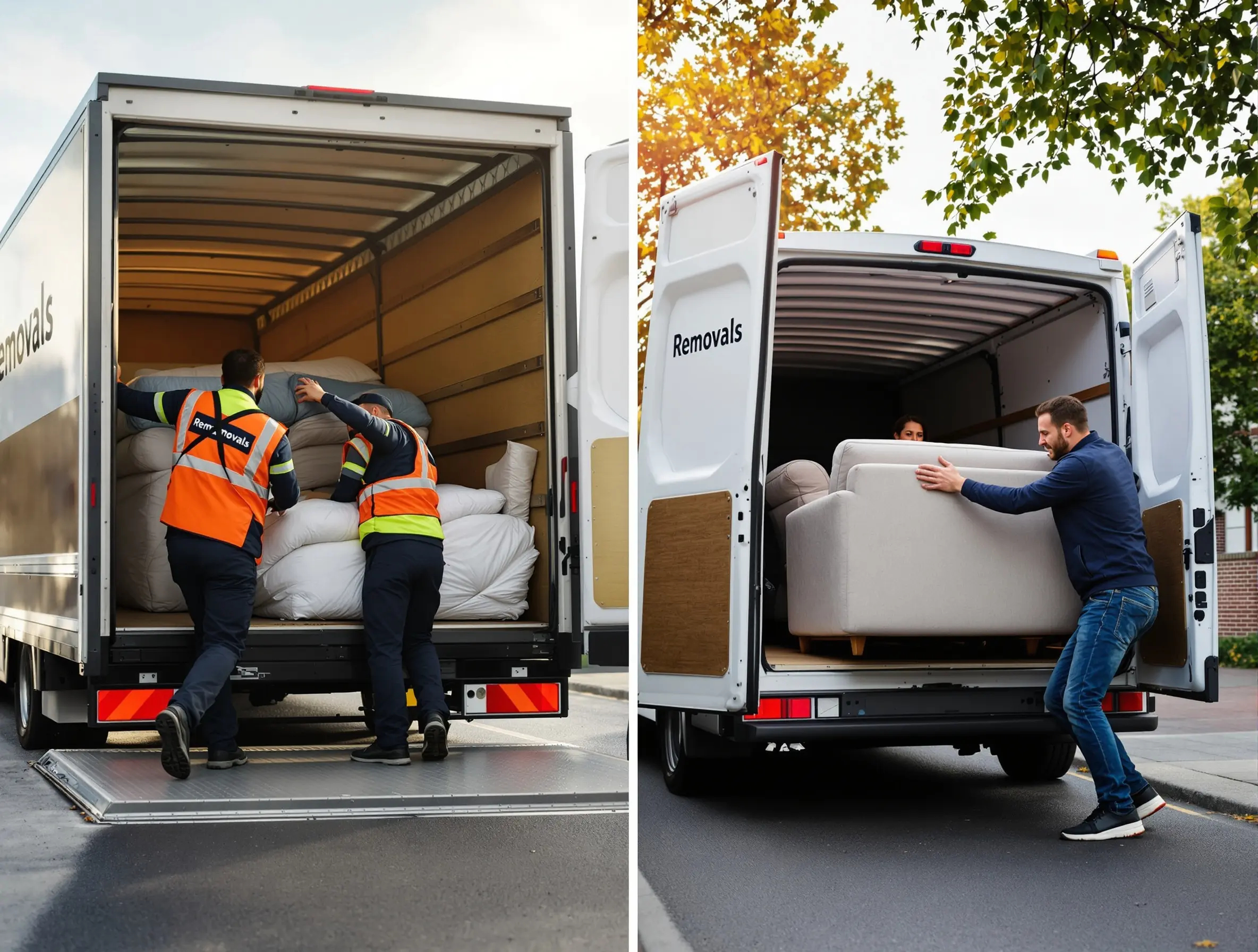
When loading, fragile kitchen boxes go on top, never underneath heavier boxes or furniture. If you are using a removal company, tell them which boxes are fragile when they arrive. A good crew will already be loading heavy items first and fragile items last, but it never hurts to flag the most delicate boxes. For a full house removal, the team will handle this loading sequence for you as standard. Whether you are moving within Crawley, across to Brighton or Worthing, or relocating from Eastbourne or Chichester, a local removals service keeps the journey short and your fragile boxes secure. For homes with awkward access or lots of furniture, our flat and apartment removals and furniture dismantling services help you prepare every room.
Frequently Asked Questions
Should I pack plates flat or upright?
Always upright, on their edge. Plates packed flat stack their weight onto each other and are far more likely to crack under a bump in transit. Packed on edge with padding between each, they absorb impact along their strongest axis.
What is the best material for wrapping glasses?
Packing paper for general glassware, with bubble wrap added for stemware and anything especially fine or sentimental. Tuck paper inside the glass as well as around it to support the bowl and stop it flexing.
Can I use newspaper to pack kitchen items?
You can, but it is not ideal. The ink can transfer onto plates, cups and hands, and unprinted packing paper is stronger and cleaner. For anything you eat or drink from, clean packing paper is the better choice.
How heavy should a box of kitchen items be?
Lighter than you think. A box of plates, glasses or tins gets heavy very quickly, so use smaller boxes and stop filling once the box is comfortably liftable. A box that strains your back on flat ground will be dangerous on stairs.
Do I need to empty my kitchen appliances before moving?
Yes. Empty and clean kettles, toasters and blenders, remove loose blades and glass parts, and dry everything thoroughly. Moisture left inside an appliance can cause issues in transit, especially on a longer move.
Is it worth paying for professional kitchen packing?
For many people, yes. A professional packing team wraps fragile items to a transport standard using commercial materials, and can pack an entire kitchen in a fraction of the time it takes to do it yourself — with a far lower risk of breakage.
Want your kitchen packed by professionals?Fragile items wrapped to a transport standard, ready for the move.